
Loading...
Serving Coppell, TX and surrounding areas. (214) 432-7164
Advanced Coppell Concrete serves Grapevine, TX with stamped concrete, driveways, patios, and foundation work. We have served this area since 2020 and know how Grapevine's mix of older homes near Historic Downtown and newer construction along SH-114 each demands a different approach.
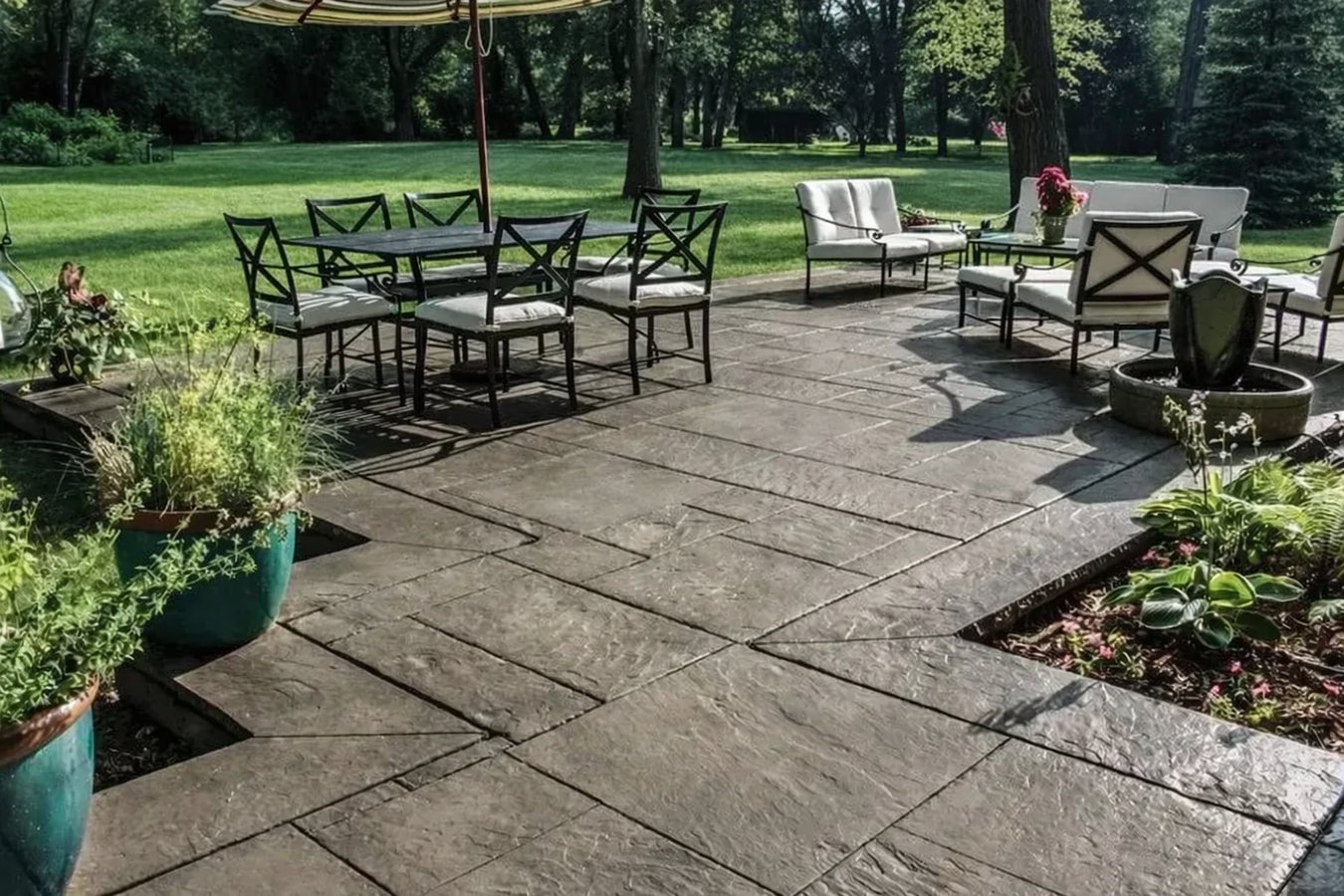
Grapevine homeowners near Historic Downtown and in the newer subdivisions off SH-114 both want outdoor surfaces that look sharp and hold up through the summer heat and spring hail cycles. Stamped concrete gives you the appearance of stone or brick with the durability of poured concrete and minimal upkeep. See our full stamped concrete services for details on patterns and finishes.
Grapevine's housing stock spans from 1970s ranch homes near the historic downtown to newer two-story builds along SH-114, and each era has its own driveway replacement timeline. We assess the condition of your existing slab and subgrade, then pour replacements with the proper base prep and control joints for Grapevine's clay soil.
Properties near Grapevine Lake deal with higher moisture exposure and root pressure from mature trees, both of which affect patio longevity. We build patios sloped for positive drainage away from the home and use base depths suited to the moisture conditions in your specific neighborhood.
Grapevine summers push well above 90 degrees for extended stretches, and pool decks take the brunt of that heat. We install pool decks with slip-resistant broomed or textured finishes that stay cool underfoot and hold up to the UV exposure and heat cycling that degrades lesser materials quickly.
Older homes in Grapevine, especially in the ranch-style neighborhoods from the 1970s and 1980s near the historic core, show foundation settlement from decades of clay soil movement. When sticking doors, cracked interior walls, or visible floor slope appear, foundation raising can correct the level without full replacement.
Lots near Grapevine Lake and its surrounding parks often have grade changes and exposure to erosion that flat lots elsewhere do not. Concrete retaining walls manage those grade transitions durably and resist the wet-dry clay movement that causes timber walls to lean and fail over a few seasons.
Grapevine's housing stock spans more than a century, from early structures near the historic Main Street corridor to ranch homes from the 1970s and 1980s and newer subdivisions along SH-114. Each era brings different concrete challenges. Homes near Historic Downtown Grapevine often sit on older street grades with mature tree canopies that put root pressure on driveways and sidewalks. The subdivisions from the 1970s and 1980s have been on the DFW black gumbo clay long enough for foundation settlement, driveway cracking, and patio edge separation to become common issues. Newer construction near the SH-121 corridor may look recent, but the same clay soil is underneath.
Grapevine's position next to DFW International Airport also means it sits at a major drainage and weather exposure point. Spring thunderstorms, hail, and occasional hard freezes all affect concrete surfaces. Hail does not visibly damage driveways the way it marks roofing, but freeze-thaw cycles after a storm can work water into small cracks and widen them significantly. Contractors here need to account for both the soil movement and the climate variability that Grapevine deals with every year. The City of Grapevine building standards reflect this range of conditions, and permitted work is required to meet those standards.
Our crew works throughout Grapevine regularly, and we understand the local conditions that affect concrete work here. The older residential streets near Historic Downtown Grapevine - the area around Main Street and the neighborhoods just north of SH-114 - have large tree canopies and properties that sometimes require root assessment before a concrete replacement can be poured correctly. The newer areas off SH-121 near Grapevine Mills have more recent builds but the same underlying clay. Properties along the western edge of the city near Grapevine Lake experience higher moisture variance than neighborhoods farther inland, which affects how we size the slab and reinforce the base.
We work across all parts of Grapevine and serve neighboring Southlake, which borders Grapevine to the east along SH-114 and shares similar high-value residential demand for quality flatwork and decorative concrete. We also regularly serve Hurst, just to the southwest via SH-121, where older housing from the same 1970s and 1980s development era faces the same clay soil challenges.
Reach out by phone or our contact form. We respond to all Grapevine requests within 1 business day to schedule a free on-site estimate. No sales pressure and no cost to you.
We visit the property, review soil and drainage conditions, and discuss your options in plain terms. You receive a written quote with full cost detail before work starts - this is the right time to ask about pricing, scope, and any permit requirements.
We pull the required Grapevine building permit before any work begins. The crew handles demolition, subgrade compaction, and forming - most residential jobs run one active working day through this stage.
Concrete is poured and finished to the agreed specification, with control joints placed to manage any future soil movement. We review cure timing and city inspection requirements with you before the job closes.
We serve all of Grapevine - from the historic neighborhoods near Main Street to the newer developments by the airport. Tell us what you need and we will be in touch within 1 business day.
(214) 432-7164Grapevine is a city of roughly 50,000 to 55,000 residents in Tarrant County, sitting at the geographic center of the Dallas-Fort Worth Metroplex. Its most recognizable feature to visitors is Historic Downtown Grapevine, a preserved Main Street corridor with 19th-century storefronts, local restaurants, boutiques, and wineries that draw visitors from across the Metroplex year-round. The older residential neighborhoods surrounding downtown have homes dating to the early and mid-1900s, adding architectural variety unusual for a DFW suburb. Most of the city's residential mass, though, consists of single-family subdivisions built from the 1970s through the 1990s - standard suburban lots with brick facades, attached garages, and concrete driveways.
State Highways 114 and 121 connect Grapevine quickly to Fort Worth to the west and Dallas to the east. DFW International Airport sits partly within city limits on the eastern edge, making Grapevine one of the few cities in the country with a major international airport as a literal neighbor. Grapevine Lake borders the north and west sides of the city and is used for boating, fishing, and recreation. Nearby Euless, which borders Grapevine to the south, shares similar 1970s-era housing and clay soil challenges, and we serve both cities regularly. We also work frequently in Flower Mound, just to the north across Grapevine Lake, where the same residential eras and soil conditions appear on the Denton County side of the water.
Get a durable, professionally poured concrete driveway built to last.
Learn MoreAdd beauty and texture to surfaces with decorative stamped concrete.
Learn MoreCustomized decorative finishes that enhance any indoor or outdoor surface.
Learn MoreEngineered retaining walls that hold soil and improve your landscape.
Learn MoreLevel, sealed concrete floors installed for residential and commercial spaces.
Learn MoreSturdy concrete steps built for safety, curb appeal, and longevity.
Learn MoreSolid slab foundations poured to precise structural specifications.
Learn MoreCommercial-grade concrete parking lots built for high traffic loads.
Learn MoreProperly sized concrete footings supporting structures from the ground up.
Learn MoreRestore settling foundations to level with professional raising techniques.
Learn MoreWhether you need a driveway replaced near Main Street or a stamped patio on the south side of town, we cover all of Grapevine and respond within 1 business day.