Loading...
Serving Coppell, TX and surrounding areas. (214) 432-7164
Your foundation has moved - doors stick, floors feel off, and cracks keep appearing. We lift settled foundations back to level and keep them there, using methods built for North Texas clay soil.
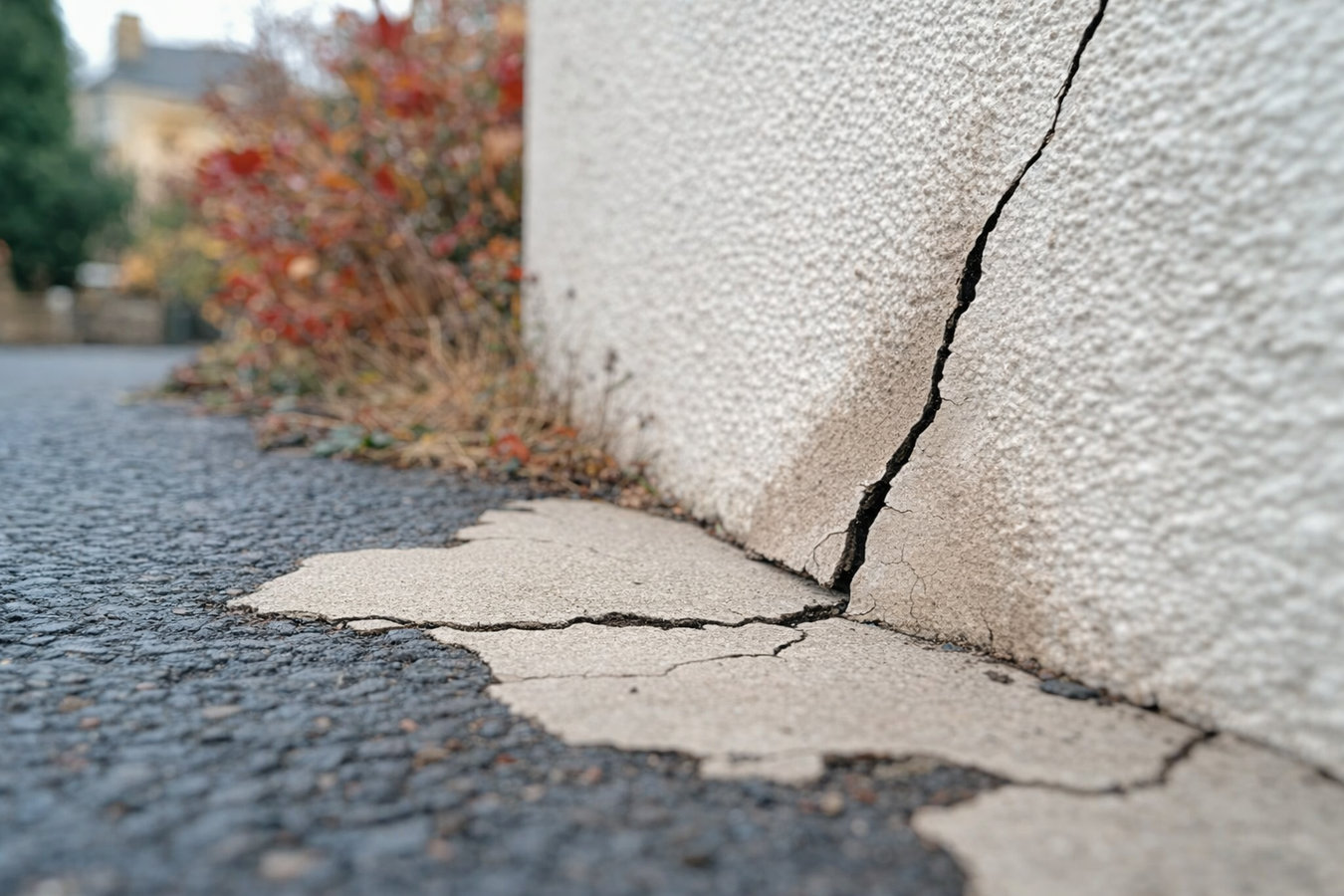
Foundation raising in Coppell, TX lifts a home back to its original elevation after the slab or piers have settled, using steel piers driven to stable soil depth or foam injection to fill voids beneath the slab, with most residential jobs completed in one to three days of active work once permits are in hand.
The settling itself is almost always caused by the expansive clay soil that runs beneath every neighborhood in Coppell and throughout the Dallas-Fort Worth area. That clay swells when it absorbs water and shrinks when it dries - and every time it shrinks, it can pull away from the foundation perimeter and create voids beneath the slab. Homeowners often notice the problem through small daily annoyances first: a door that suddenly drags, a window that will not quite close, a floor that feels slightly off underfoot. Those symptoms are worth taking seriously. If you are also dealing with cracked concrete near the foundation perimeter, our slab foundation building service covers cases where the existing slab has moved beyond repair and a new engineered pour is the right path forward.
When your foundation shifts, door frames and window frames go slightly out of square. Doors that used to swing freely now drag on the floor or fail to latch, and windows that once slid easily now stick or leave visible gaps. This is one of the most reliable early signs that your foundation has moved.
Diagonal cracks in drywall that radiate from the corners of door frames or windows are a classic sign of foundation movement rather than normal settling. In Coppell homes, these often appear after a prolonged dry summer when clay soil has contracted beneath the slab. If you see these cracks widening over time, have a professional evaluate the foundation.
If a ball rolls consistently toward one side of a room or furniture seems to lean, your floor may have tilted due to foundation movement. In North Texas homes built on clay soil, this kind of uneven settling tends to worsen with each drought cycle if left unaddressed.
Coppell has many brick-veneer homes, and stair-step cracks running through the mortar joints of exterior brick are a strong visual indicator of foundation movement. These cracks follow the mortar lines in a staircase pattern because the brick is rigid and cannot flex as the foundation shifts. If you see these on the outside of your home, get the foundation evaluated soon.
The two main methods for raising a residential foundation are steel pier installation and foam injection. Steel piers are driven deep into stable soil or bedrock, then used to hydraulically lift the foundation - this is the standard approach for significant settling across a larger area of the slab and produces a long-term, documented repair with a transferable warranty. Foam injection fills voids beneath a slab and can raise it with minimal surface disruption, though it is better suited to smaller, more localized settling where the slab has dropped but the underlying soil has not eroded significantly. Our concrete cutting service works alongside foundation raising when access cuts are needed to reach buried utilities or remove sections of damaged slab before the lift or after it.
Every foundation raising job begins with a thorough elevation assessment - we take readings at multiple points across the slab to map where and how much movement has occurred. That data drives the pier count and placement, and we walk you through the elevation map before any work begins so you understand exactly what the proposal is based on. Getting a second opinion from another licensed contractor is completely reasonable for a job of this size, and we encourage it. If the evaluation reveals that raising is not viable and a new pour is the better path, our slab foundation building service handles the full replacement from permitting through the final inspection.
For significant or widespread settling - piers driven to stable depth, hydraulic lift, city permit, and transferable warranty. The standard for Coppell homes on clay soil.
For localized void-fill and minor slab raising where soil displacement is limited - faster and less disruptive for the right situation.
A thorough on-site measurement of slab elevation at multiple points, resulting in a written proposal that explains what the data shows and what the repair involves.
We apply for the required Coppell building permit and schedule the city inspection as part of every structural repair - you get the documentation without managing the process.
Coppell sits on some of the most expansive clay soil in the United States - the same heavy, reactive clay that runs throughout the Dallas-Fort Worth Metroplex. This clay absorbs water and swells, then dries out and shrinks, sometimes dramatically. Every time it shrinks, it can pull away from the foundation perimeter and create the voids that allow the slab to drop. North Texas also goes through extended drought cycles that accelerate this process, and Coppell's many well-established neighborhoods have large, mature trees whose roots actively draw moisture from the soil directly beneath and around foundations. Foundation movement is not a sign that a home was built poorly - it is the predictable result of building on this type of soil, and it affects properties throughout Carrollton and Irving just as it does here.
Most of Coppell's housing stock was built between the mid-1980s and early 2000s, which means many homes here are 25 to 40 years old. At that age, the repeated wet-dry cycles that characterize North Texas summers and springs have had decades to work on the clay beneath these foundations. Homeowners who have maintained consistent soil moisture around their perimeter through soaker hoses or drip irrigation have generally fared better - those who have not often find that settling accelerates noticeably after each dry summer. Foundation raising can be done year-round in Coppell since the area rarely sees the hard freezes that would prevent excavation, but the best time to address the problem is after a period of stable soil moisture rather than during an extreme drought.
Tell us about the symptoms - sticking doors, cracks, sloping floors. We respond within 1 business day to schedule a free on-site evaluation at your Coppell property.
We walk the interior and exterior of your home, take elevation readings at multiple points across the slab, and assess soil conditions around the perimeter. This typically takes one to two hours and results in a written proposal explaining the pier count and the reasoning behind it.
We apply for the required Coppell building permit on your behalf before any work begins. Permitting typically adds a week or two to the timeline - we handle the paperwork and keep you updated so you are not left wondering about the status.
The crew excavates small access points at pier locations, drives steel piers to stable soil depth, and hydraulically lifts the foundation while monitoring elevation readings throughout. Most jobs are done in one to three days. After the backfill and cleanup, we schedule the required city inspection and walk you through the before-and-after readings.
We take elevation readings across your slab and give you a written assessment - no pressure, no obligation, just the facts about your foundation.
(214) 432-7164Texas requires a specific state license for foundation repair work - separate from a general contractor license. We hold that license and you can verify it through the state's online system at tdlr.texas.gov before signing anything. Hiring an unlicensed contractor for this work removes your consumer protections under Texas law.
We apply for the required Coppell building permit as a standard part of every job and schedule the city inspection once the lift is complete. The permit and inspection sign-off create a documented record that protects you - an independent inspector reviews the work, and that paper trail has real value if you ever sell the home.
Steel pier systems installed to stable soil depth are designed as a long-term repair. We back our pier installations with a written warranty that transfers to the next owner if you sell the home. Ask specifically what the warranty covers, how long it lasts, and that it is transferable - those details matter.
Coppell sits on some of the most active expansive clay soil in the country - soil that swells when wet and shrinks when dry on a cycle that never stops. Piers driven to stable depth below the active clay zone hold their position through those seasonal swings, so you are not back in the same situation after the next dry Texas summer.
Foundation repair is one of the highest-stakes jobs a homeowner hires out. Licensing, permitting, and a written warranty are not optional extras - they are the baseline that separates a contractor you can trust from one you cannot. We hold the required Texas state license, pull the Coppell building permit on every structural job, and back our pier installations with a warranty that transfers to the next owner if you ever sell. Verify any foundation contractor's Texas license status through the state's online system before signing anything.
After a foundation is raised, precise concrete cutting lets us access utility lines or remove damaged slab sections cleanly before patching.
Learn MoreWhen a foundation has moved beyond repair, our slab foundation building service delivers a new engineered pour from permit to final inspection.
Learn MoreEvery dry Texas summer your foundation goes without repair, the settling gets a little worse. Call now and we will get your free evaluation on the schedule.